Sustainable Products
We are proud of our commitment to seek and source sustainably harvested fish certified by third parties. Please be advised that the reason some of our products are not assessed or certified yet is either due to lack of time on the part of a reviewing body (like Monterey Bay Aquarium) or lack of a unified group of stakeholders requesting assessment (such as Marine Stewardship Council.) Lack of assessment or certification does not automatically mean that a fish harvest is unsustainable. All countries from which we harvest fish have management programs in place to maintain a good harvest level; they want to have fish stocks for future generations just as we do.
- Marine Stewardship Council (MSC) is a global organization working with fisheries, seafood companies, scientists, conservation groups and the public to promote the best environmental choice in seafood. MSC has established a guide for sustainability. Assessments are done by third party firms and those passing can use the MSC logo under a logo use contract.
- The Monterey Bay Aquarium (MBA) Seafood Watch program helps consumers and businesses make choices for healthy oceans. MBA has established a guide for sustainability based on scientific research which is peer reviewed.
- The Safina Center (formerly Blue Ocean Institute) is a conservation organization that uses art and literature to translate scientific information into language people can understand and use to make better choices on behalf of the sea.
- Food and Agriculture Organization (FAO) works together with the United Nations system to support global sustainable development initiatives in order to secure responsible fisheries worldwide.
- Friend of the Sea is a non-profit, non-governmental organization whose mission is the conservation of the marine habitat. Products and their origins are audited onsite by independent international certification bodies, against strict Friend of the Sea sustainability criteria.
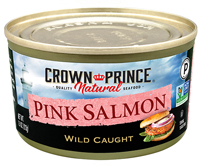
Pink Salmon (Oncorhynchus gorbuscha) are wild caught from Alaskan and Canadian waters in the Northeast Pacific Ocean. (FAO zone 67)
This species is MSC Certified and/or ASMI Certified. Monterey Bay Aquarium has listed this species as the Best Choice. The Safina Center has ranked this species as Green. (Green indicates the top rating. Species is relatively abundant, and fishing methods cause little damage to habitat and other wildlife.) Learn more about salmon.
Alaskan Coho Salmon (Oncorhynchus kisutch) are wild caught from Alaskan waters in the Northeast Pacific Ocean. (FAO zone 67)
This species is ASMI Certified. Monterey Bay Aquarium has listed this species as the Best Choice. The Safina Center has ranked this species as Green. Learn more about salmon.
Anchovies (Engraulis encrasicolis) are wild caught off the coast of Morocco. (FAO zone 34)
This species in this FAO zone is not MSC certified, but is in pre-assessment discussions with Moroccan government. Monterey Bay Aquarium has not assessed this species in this FAO zone due to budget limitations. The Safina Center has not yet ranked this species.
Kipper Snacks (Clupea harengus harengus) are wild caught off the Eastern coast of Canada. (FAO zone 21)
This species is MSC Certified. Monterey Bay Aquarium has listed this species as Good and recommends purchasing from MSC certified fisheries. The Safina Center has ranked this species as Yellow. (Yellow indicates some problems exist with this species' status or catch methods, or information is insufficient for evaluating.)
Brisling Sardines (Sprattus sprattus) are wild caught off the west coast of Scotland in the Northeast Atlantic Ocean. (FAO zone 27, VIa or VIIe)
This species in this FAO zone is not MSC certified and is not in assessment. Monterey Bay Aquarium has not assessed this species in this FAO zone due to budget limitations. The Safina Center has not yet ranked this species. However, Pacific Ocean catches using the same methods as those used for Crown Prince products cause minimal environmental damage, little by-catch and are rated Green.
Skinless & Boneless Sardines (Clupea pilchardus or Sardina pilchardus walbaum) are wild caught off the coast of Morocco, in the Eastern Central Atlantic Ocean. (FAO zone 34)
This species in this FAO zone is not MSC certified and is not in assessment. Monterey Bay Aquarium has not assessed this species in this FAO zone due to budget limitations. The Safina Center has not yet ranked this species. However, Pacific Ocean catches using the same methods as those used for Crown Prince products cause minimal environmental damage, little by-catch and are rated Green.
Baby Clams (Smoked or Boiled) (Paphia undulate) are harvested from managed beds in Thai waters. (FAO zones 57 and 71)
This species in these FAO zones is not MSC certified and is not in assessment. Monterey Bay Aquarium has listed this species as the Best Choice. The Safina Center has not yet ranked this species. However, Atlantic Ocean Quahog catches using the same methods as those used for Crown Prince products are rated Yellow.
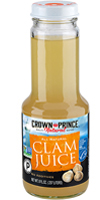
Clam Juice (Cardium edulis) is a product of managed clam beds in Holland. (FAO zone 27)
This species is MSC Certified. Monterey Bay Aquarium has listed this species as the Best Choice. The Safina Center has not yet ranked this species.
Oysters (Smoked or Boiled) (Ostrea 'Crassostrea' gigas) are harvested from managed beds in South Korean waters. (FAO zone 61)
This species in this FAO zone is not MSC certified and is not in assessment. Monterey Bay Aquarium has listed this species as the Best Choice. The Safina Center has not yet ranked this species.
Fancy White Crab Meat (Portunus pelagicus) is harvested from Thai waters. (FAO zones 57 and 71)
This species in these FAO zones is not MSC certified and is not in assessment. Monterey Bay Aquarium lists this species as one to avoid due to lack of regulations. However, Thailand is conducting a Fishery Improvement Project (FIP) to better protect and regulate the fishery. The Safina Center has ranked this species as Red. (In this case, red indicates lack of regulation of the many small fisheries harvesting this species of crab.)
Yellowfin Tuna (Thunnus albacares) are wild caught from the Maldives in the West Indian Ocean. (FAO zone 51)
This species in this FAO zone is MSC Certified. Monterey Bay Aquarium has listed this species as a Good Alternative. The Safina Center has ranked this species as Yellow. However, Yellowfin Tuna captured in pole and troll fisheries produce little to no bycatch and are a model for selective fisheries. Learn more about tuna.
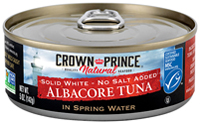
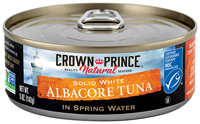
Albacore Tuna (Thunnus alalunga) are wild caught from within the 200 mile exclusive economic zone of New Zealand. (FAO zone 81)
This species in this FAO zone is MSC Certified. Monterey Bay Aquarium has listed this species as a Good Alternative. The Safina Center has not yet ranked this species. However, North Pacific Ocean catches using the same methods as those used for Crown Prince products are rated Green. Learn more about tuna.
Tongol Tuna (Thunnus tonggol) are wild caught from the East Indian Ocean and the West Central Pacific Ocean. (FAO zones 57 and 71)
This species in these FAO zones is not MSC certified and is not in assessment. Monterey Bay Aquarium has listed this species as a Good Alternative. The Safina Center has not yet ranked this species. Learn more about tuna.
|